A SaaS platform that works for 10 customers can start to wobble at 100 if the early decisions are wrong. That is usually when support tickets rise, features slow down, and the team realises the product was built for launch, not for growth.
For Irish startups and SMEs, that pressure shows up quickly. You may be trying to win your first customers in Dublin, expand into Cork or Galway, and prove the model before cash gets tight. A fragile product makes every next sale harder.
This guide shows you how to build a scalable SaaS platform without forcing a rebuild every time usage grows. You will learn what to decide before code is written, how to shape the architecture, what to do about data and security, and how to launch in phases with less risk. The goal is not to build the biggest system first, but the right one: enough structure to grow, enough discipline to avoid rework, and enough flexibility to support the next sale. For more context on the technical decisions behind the build, the custom software development in Ireland complete 2026 guide is a useful companion.
How to Build a SaaS Platform That Can Scale
If you want a scalable SaaS platform, begin with the business rules, not the framework. The software needs to support how you charge, how customers onboard, which actions must be self-serve, and where your team still needs to stay involved.
Before development starts, get clear on four things:
- Who the product is for and what outcome they pay for. If that is vague, the roadmap will drift.
- Which steps must be fast and friction-free. In most SaaS products, signup, billing, and password recovery should not need manual help.
- What data must be stored from day one. Missing history later creates expensive clean-up work.
- What should be configurable versus custom. Irish SMEs often need flexibility without building a separate product for every client.
Imagine an Irish services company building a client portal for recurring reporting. If they only design for today’s workflow, they can box themselves out of future pricing tiers, extra permissions, or enterprise buyers. That is why the business model should shape the product, not the other way around.
Once those decisions are clear, the technical choices become far easier to make. A strong foundation at this stage also makes it easier to turn the idea into an MVP later without wasting money on the wrong features.
Design an Architecture That Can Absorb Growth
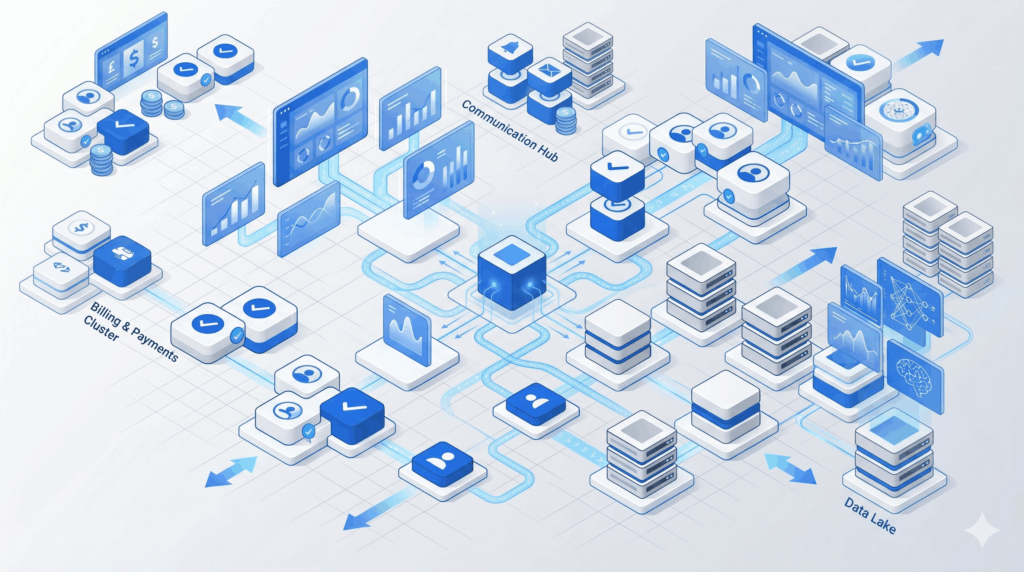
A SaaS platform can only scale if the SaaS architecture is built to handle more users, more data, and more complexity without collapsing under its own weight. That does not mean overengineering. It means making choices that reduce future rewrites.
For many early products, a clean modular monolith is a smarter starting point than breaking everything into services too soon. It keeps the codebase understandable while still allowing you to split out parts later when the product earns it. That is especially useful if you are using a Launchpad for Startups approach and need to launch fast without painting yourself into a corner.
Keep these decisions front and centre:
- Define module boundaries early. Each part of the platform should own one job, which makes change safer.
- Plan for multi-tenant architecture. Even if you start small, SaaS products often grow into teams, roles, and tiered accounts.
- Use cloud infrastructure that can expand horizontally. That gives Irish businesses more room to grow than a fixed setup.
- Separate heavy reporting from live user actions. Dashboards and analytics should not slow down the core product.
An Irish HR tech startup might begin with one simple portal, then later need manager roles, department access, and more detailed reporting. If the original structure was too rigid, every new feature becomes a patch. If the structure was planned well, those changes are additions rather than repairs.
That is also why cloud choices matter, especially for Irish teams that need to stay lean while growing.
Build Operations, Data, and Security In From Day One
A scalable SaaS platform needs more than good code. It also needs clean data, clear support processes, and enough security to protect customer trust.
The businesses that scale well usually build these basics early:
- Structured data rules. Decide which fields are required, how records connect, and what happens when information changes.
- Logging and monitoring. You need to see failures early, not after customers have already reported them.
- Role-based access. Different users should only see the data and actions they actually need.
- Backup and recovery. If something breaks, the team should know how to restore service quickly.
- A simple support loop. Customers need a clear way to report issues, and your team needs a way to prioritise them.
Think of an Irish logistics business running a customer portal for bookings, invoices, and delivery updates. If the platform has weak permissions and poor audit trails, one bad release can affect both operations and client confidence. Good controls do not slow growth; they make growth safer.
This is also where process improvement pays off. Cozmotec’s process improvement work helps businesses remove manual steps before those steps become bottlenecks inside software.
Launch in Phases and Measure What Matters
The smartest SaaS MVPs grow through controlled releases, not one giant launch and a hope for the best. Phased delivery lets you test demand, watch how people actually use the product, and fix problems before they spread.
For Irish founders, that matters because funding, hiring, and market pressure are often tight. You may be using Enterprise Ireland support, a Local Enterprise Office programme, or simply your own cash runway. A phased release keeps the product moving without betting everything on one version.
Track the signals that show whether the platform is really scaling:
- Activation rate. Are users reaching their first useful outcome quickly?
- Retention. Are customers coming back because the product solves a real problem?
- Support load. Are the same issues repeating, which usually points to a product or UX gap?
- Peak performance. Does the system stay quick when traffic rises?
A Galway-based SaaS business serving a narrow B2B niche might begin with a few accounts, then need new pricing tiers and better reporting within six months. If the team watches the right metrics, they can scale the right parts first instead of guessing.
That discipline turns growth into a plan, not a scramble.
How Cozmotec Can Help
Building a SaaS platform is really a mix of product thinking, technical planning, and disciplined delivery. Cozmotec’s custom software development service is built for that kind of work, with an emphasis on business fit rather than unnecessary complexity.
The team can also support the planning side in practical ways, helping you keep scope, priorities, and releases under control as the platform grows. That matters because a good plan saves time, money, and rework later.
Working with Cozmotec usually starts with a practical conversation about your users, your revenue model, and the bottlenecks you want to avoid. From there, the team shapes the build around what your business needs now, while leaving room for the next phase of growth. If you’d like to talk through what this could look like for your business, book a free discovery call with the Cozmotec team — no jargon, no obligation, just an honest conversation about where you are and where you want to go.
Frequently Asked Questions
What makes a SaaS platform scalable?
A scalable SaaS platform can handle more users, more data, and more transactions without forcing a rebuild. The key signs are stable performance, clear code structure, and workflows that do not rely on manual fixes. If every traffic spike creates chaos, the platform is not really scalable. A good SaaS architecture and a sensible multi-tenant architecture both help here.
How do you build a SaaS platform from scratch?
Start with the business model, then design around the workflow, data, and pricing rules that matter most. A strong SaaS platform usually begins with an MVP and grows in phases once real users validate the idea. That approach keeps the first version focused and lowers the cost of mistakes. It also gives you a cleaner path from prototype to product.
What is the biggest mistake founders make when scaling SaaS?
The biggest mistake is building for today’s customer count instead of next year’s growth. Founders often delay architecture, security, and monitoring decisions until the product is already under pressure. In Ireland, that can be especially painful because budgets and hiring capacity are often tighter than founders expect. The fix is to plan for the next stage before you reach it.
Do Irish businesses need custom software for SaaS, or should they use off-the-shelf tools first?
Off-the-shelf tools are fine when the process is standard and the goal is speed. Custom software becomes the better option when your workflow is unique, your customers need a tailored experience, or your growth depends on features generic tools cannot support. Cozmotec often helps business owners compare both routes before they spend money in the wrong place. The goal is fit, not custom for its own sake.
How can Irish startups fund a SaaS platform build?
Many Irish startups combine their own investment with support from local and national programmes, depending on eligibility and stage. Enterprise Ireland, Local Enterprise Offices, and schemes such as the Trading Online Voucher can sometimes support parts of the digital journey. For a SaaS platform in Ireland, the best route is the one that matches your stage, your product, and your next milestone. That keeps funding aligned with growth instead of slowing it down.
Where to Go From Here
The strongest SaaS platforms are not the ones with the most features. They are the ones built around a clear business model, sensible architecture, and a release plan that protects the team from avoidable rework.
If you get those foundations right, growth becomes much easier to manage. You can add users, improve features, and expand the product without constantly fixing the basics.
If you are planning a new platform or trying to stabilise one that is already under pressure, get in touch with the Cozmotec team to discuss the next practical step for your business. For a related read, the digital transformation roadmap for Irish SMEs is a strong next step.