A website can look polished and still quietly turn customers away. If your website is losing customers, the problem is often not that people cannot find you; it is that they do not quickly trust you, understand you, or know what to do next.
That shows up in very ordinary ways: enquiry forms that never get completed, service pages that feel vague, mobile layouts that are awkward to use, and visitors who leave after one page. For Irish SMEs, those leaks add up fast because every enquiry matters and most buyers are comparing you against two or three other options at the same time.
This article will show you how to spot the warning signs, why they happen, and what to fix first so your website starts working harder for your business. If part of the issue is search visibility, what SEO is and why it matters will help you separate traffic problems from conversion problems. You will also see when a simple fix is enough and when a redesign or broader digital transformation is the smarter move.
Website Losing Customers: How to Spot the Signs
The first step is to separate a traffic problem from a conversion problem. A website losing customers usually still gets visits, but those visits do not turn into calls, form fills, quotes, or purchases.
Look for patterns rather than one-off dips. If people land on your homepage and disappear, if your contact page gets traffic but no submissions, or if your team keeps hearing that a customer could not find pricing, delivery areas, or the next step, the site is probably creating friction.
Common signs include:
- High traffic on key pages with very few enquiries. That usually means the page is attracting interest but failing to convert it.
- A mobile experience that feels cramped or slow. Irish buyers are often checking you on their phones between meetings, in the car, or on the move, so mobile friction costs real leads.
- Weak calls to action. If every page ends with a different button or no button at all, people hesitate.
- Outdated proof points. Old testimonials, broken case-study links, or no clear examples make it harder to trust you.
- Confusing navigation. If a visitor has to think too hard about where to go next, they often leave instead.
Imagine an Irish professional services firm in Dublin getting steady website traffic from Google but almost no enquiries. The issue is not visibility; it is that the pages never answer the simple questions people are already asking. Once those questions are answered clearly, the same traffic becomes far more valuable. That is why understanding the symptoms matters before you start changing design or copy.
Why Customers Leave in the First Place
Most websites lose customers for the same handful of reasons: unclear messaging, too much friction, weak trust signals, and a mismatch between what the visitor expects and what the page actually delivers. In Ireland, where many SMEs rely on referrals and repeat business, a website has to do more than look professional. It has to remove doubt quickly.
One of the biggest problems is that the homepage tries to say everything and ends up saying nothing. Visitors should understand within seconds what you do, who you help, and why you are the right choice. If they have to decode buzzwords, they are doing unpaid work on your behalf.
Another common issue is friction in the journey. Maybe the form is too long, the phone number is buried, or the mobile menu hides the very page they came to find. Maybe your site loads slowly on a patchy connection, which is enough to lose a prospect before they ever read your offer.
A second example: imagine a Cork-based manufacturer with a good reputation offline but a website that still uses generic stock phrases and no concrete proof. A buyer from Galway may assume the business is smaller, older, or less capable than it really is. That assumption may be unfair, but the website creates it.
If you are deciding which features actually help customers convert, Cozmotec’s guide to the most popular website features for businesses is a useful reference point. The fix is to stop treating the site as a brochure and start treating it as a sales path. That leads naturally to the practical changes that make the biggest difference.
How to Fix the Problem Without Rebuilding Everything
You do not always need a full rebuild to stop losing customers. In many cases, the fastest gains come from tightening the message, removing friction, and improving the pages that already get the most attention.
Start with the highest-impact pages first:
- Rewrite the homepage hero section so it says what you do in plain English. People should not need to guess whether you sell software, services, products, or support.
- Check every service or product page for a clear next step. A visitor should know whether to book a call, request a quote, or send a message without hunting for the CTA.
- Cut unnecessary form fields. If you only need a name, email, and short message, do not ask for ten more details before trust is built.
- Strengthen proof. Add case studies, testimonials, results, or sector-specific examples that show you understand real business problems.
- Improve speed and mobile usability. Even small technical delays can make a page feel less credible and more frustrating.
This is where a practical view matters. Cozmotec’s website design for Irish businesses focuses on making the site easier to use and easier to trust, not just prettier. That is often what converts a passive visitor into a real lead.
A useful rule of thumb is to test changes against one question: would this help a visitor make a decision faster? If the answer is no, the change probably belongs lower on the list. That mindset also helps when you are deciding whether to improve the site or rethink the wider process behind it.
When a Redesign Is the Smarter Move
Sometimes the issue is deeper than copy tweaks or a few layout changes. If the site is built on old assumptions, uses messy content structures, or cannot support the services you now sell, a redesign may save time and money in the long run.
A redesign becomes the right call when the current website cannot answer basic customer questions cleanly, when updates are awkward, or when your team avoids touching it because every change feels risky. At that point, you are not just fixing a website losing customers; you are fixing a system that no longer matches how your business operates.
This is also where a wider digital transformation conversation can help. A website often sits next to quotation workflows, lead handling, and follow-up processes. If those parts are disconnected, the website can generate interest that your team then struggles to capture or organise.
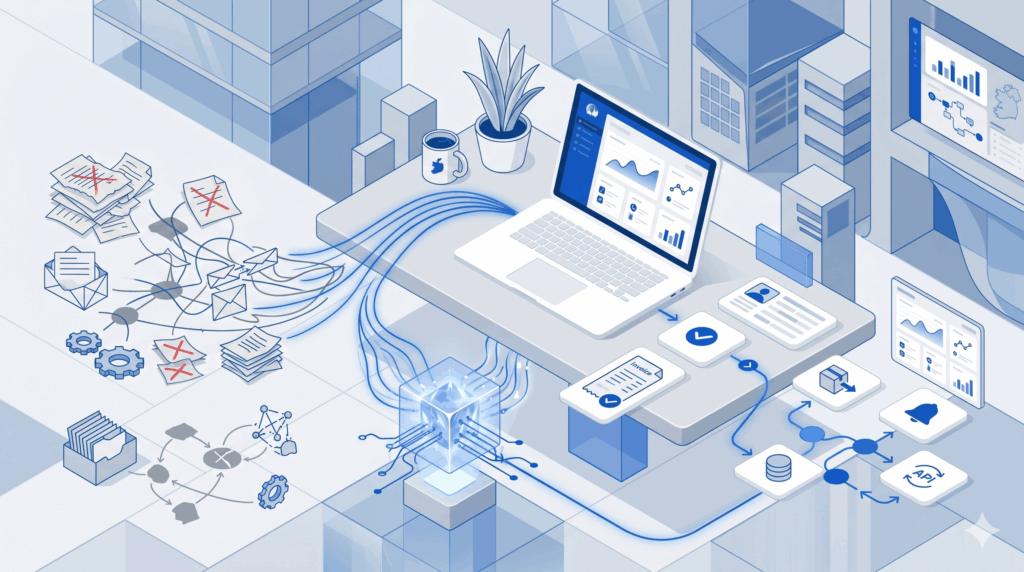
A practical example is an Irish B2B business that receives lots of enquiries, but they land in different inboxes and nobody follows up consistently. A better website helps, but a cleaner process behind it helps even more. That is why Cozmotec often looks at both the front end and the workflow behind it, including process improvement where bottlenecks are slowing response times.
For some Irish SMEs, the fix may even be part-funded. Depending on eligibility, support such as Local Enterprise Office options or Trading Online Voucher-style schemes can make a redesign easier to justify. The point is not to chase grants for their own sake. It is to improve the part of your business that is already leaking opportunity.
How Cozmotec Can Help
Cozmotec works best with businesses that know something is off but need a clear way to fix it. If your website is losing customers, we usually start by looking at the customer journey, the content that creates hesitation, and the operational steps behind each enquiry.
That often leads to a mix of website design, process improvement for growing teams, and sometimes custom software development where the real problem is not the page itself but the workflow around it. The goal is simple: make it easier for the right people to take action and easier for your team to handle the result.
Working with Cozmotec is usually hands-on and straightforward. The team will talk through what is happening now, identify the highest-friction points, and recommend changes that fit your scale, budget, and Irish market reality.
If you’d like to talk through what this could look like for your business, book a free discovery call with the Cozmotec team — no jargon, no obligation, just an honest conversation about where you are and where you want to go.
Frequently Asked Questions
Why is my website losing customers even though it gets traffic?
Traffic alone does not mean the site is converting. If your messaging is unclear, your calls to action are weak, or your mobile experience is awkward, visitors can leave without ever enquiring. That is why the phrase website losing customers usually points to a conversion problem, not a visibility problem.
How do I know if my website is hurting sales?
Look for signs such as repeated drop-offs on key pages, low enquiry rates, and visitors asking questions that should have been answered on the site. If sales conversations keep starting with basic confusion, your website may be creating doubt rather than removing it. A simple review of the customer journey will usually show the weak point.
What is the fastest way to fix a website that is losing customers?
Start with the pages that get the most traffic and the least action. Rewrite the headline, clarify the offer, shorten the form, and add stronger proof. For many Irish SMEs, those changes produce a better result than a full rebuild because they remove the biggest barriers first.
Do I need a new website, or can I just improve the one I have?
You often can improve the current site first, especially if the issue is content, layout, or weak calls to action. A new site makes more sense when the underlying structure is outdated, hard to edit, or tied to a process that no longer fits your business. Cozmotec usually helps clients work out which path is cheaper and more effective.
Is this a common issue for Irish SMEs?
Yes, especially for Irish SMEs that grew through referrals and never had to think hard about the website until leads slowed down. A site that once felt good enough can become a bottleneck as customer expectations rise. In Ireland, that is often where support from a local digital partner becomes useful because the problem is part website, part process, and part market fit.
What This Means for Your Business
The pattern is usually clearer than it first appears. If your website is losing customers, the cause is often a mix of unclear messaging, friction in the journey, and weak trust signals rather than one dramatic technical failure. Fix those issues first and you will usually see a better return than chasing a redesign for the sake of it.
You do not need to guess your way through it. A focused review can show which changes will move the needle and which ones are just cosmetic.
If you want a practical next step, get in touch with Cozmotec and talk through the pages, process, and customer journey that may be holding you back. You will come away with a clearer view of what to fix first.