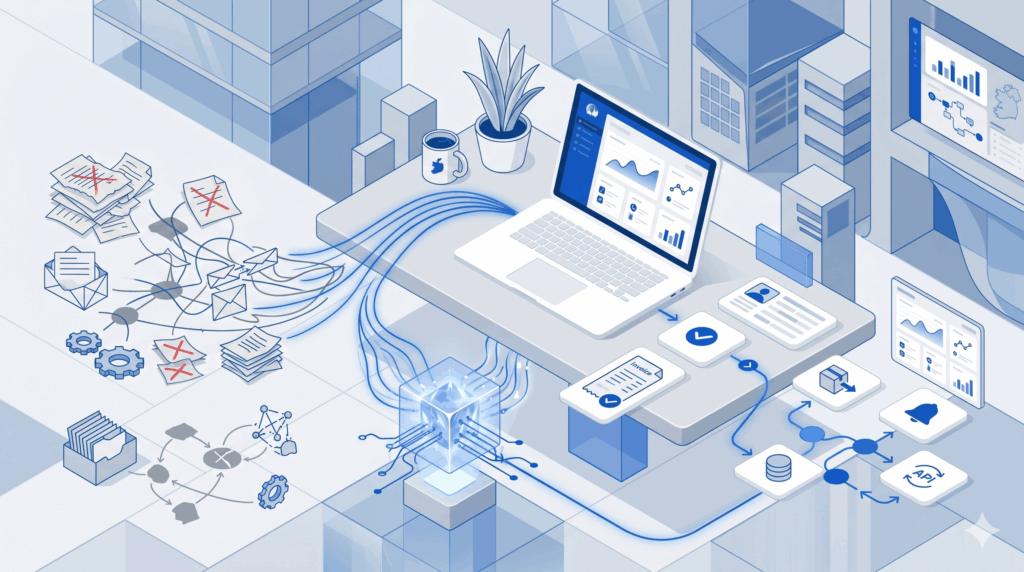
If your team still spends hours moving data between emails, spreadsheets, and software, business process automation is probably already overdue. For many Irish SMEs, the real cost is not just the time lost; it is the mistakes, delays, and follow-up work that pile up behind the scenes.
That pressure is especially common in growing Irish businesses where one person is doing the work of three. Sales leads slip, invoices get delayed, and customer service slows down because the process depends on memory rather than a system. If that sounds familiar, this guide will show you what business process automation is, where it helps most, and how to decide which tasks are worth automating first. It also connects that idea to practical next steps, including Cozmotec’s digital transformation roadmap for Irish SMEs, so SME digital transformation feels practical rather than overwhelming.
By the end, you will know how business process automation works in plain English, which parts of an SME are the best candidates for automation, and what a sensible first step looks like for an Irish team that wants results without unnecessary complexity. You will also see how process automation for SMEs supports smarter growth without turning your business into a tech project.
Why business process automation matters for Irish SMEs
Business process automation means using software to handle repetitive work that people currently do by hand. In practice, that could mean routing an approval request automatically, creating a follow-up task when a form is submitted, or syncing customer records between systems without manual copying. For Irish SMEs, that matters because growth usually adds pressure faster than headcount, and the need to automate repetitive tasks rises with every new customer, quote, or order.
The biggest benefit is consistency. When a process is manual, two people can handle the same task differently, which creates errors and slows down handovers. Automation removes a lot of that variation, so the business can keep moving even when someone is on leave, busy, or working across multiple roles. If you are already thinking about the operational side of this, Cozmotec’s process improvement services are built around exactly that kind of problem.
There is also a commercial benefit. Faster admin means faster quotes, faster follow-up, and fewer missed opportunities. That matters whether you run a Dublin professional services firm, a Cork e-commerce brand, or a Galway startup trying to look bigger than its team size. The best business process automation in Ireland does not feel flashy; it quietly removes friction from the work that already exists.
The kinds of work automation handles best
Not every task should be automated. The best candidates are usually repetitive, rule-based, and easy to describe in a step-by-step way, which is why businesses often look for ways to automate repetitive tasks.
- Lead capture and routing can be automated so enquiries go to the right person immediately. That reduces response times and stops good leads from sitting in inboxes.
- Invoice reminders, follow-up messages, and status notifications can run in the background. That gives your team time back and helps the business stay organised.
- Data entry between systems can often be removed entirely. When customer information only needs to be entered once, accuracy improves fast.
- Internal approvals can be made smoother with automatic alerts and clearer workflows. That is especially useful in SMEs where managers approve a lot of small but frequent decisions.
When you look at it this way, automation is not about replacing people. It is about making sure people spend more time on work that actually needs judgment, conversation, or creativity.
Where automation delivers the biggest gains in day-to-day operations
The smartest automation projects usually start with the parts of the business that are already causing bottlenecks. That might be sales, customer onboarding, finance, operations, or reporting. The right choice depends on where your team loses the most time and where mistakes are most expensive.
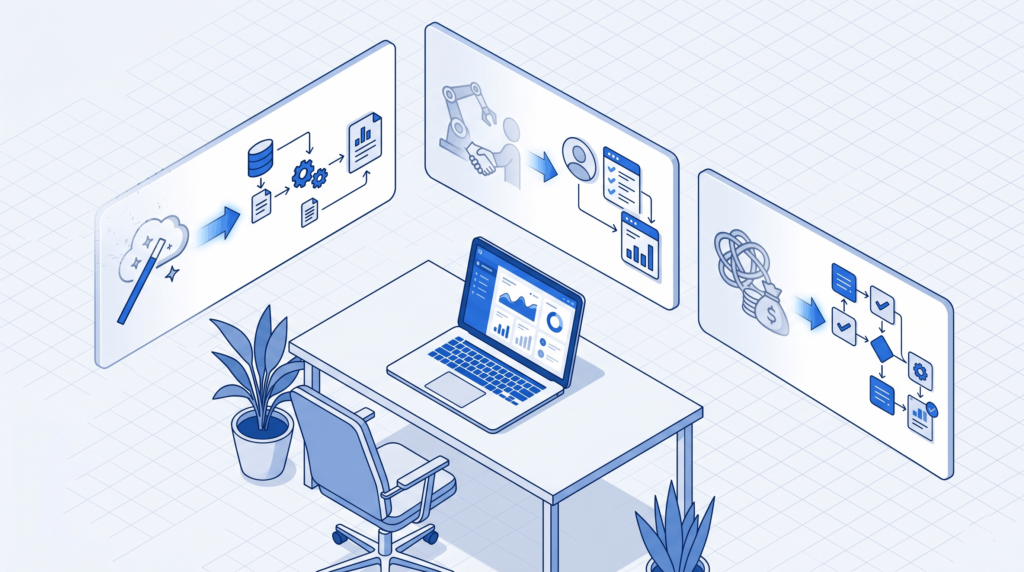
A useful way to think about it is this: if a task is repeated often, follows a clear pattern, and has a measurable outcome, it is a strong candidate for workflow automation. For many teams, workflow automation is the quickest way to remove friction without changing the whole business. For example, a sales team might use automation to send a follow-up email after every new enquiry, create a CRM record, and assign the lead to the right rep. A finance team might use it to trigger reminders when an invoice is overdue. A services business might use it to generate onboarding tasks as soon as a contract is signed.
If you are comparing tools, the important question is not which system has the most features. It is which one will remove the most manual effort without creating new admin somewhere else. That is why the most effective process automation for SMEs tends to focus on a narrow workflow first, then expands once the team sees the value.
Common functions that are often worth automating first
- Enquiry handling is usually an easy win because the logic is simple and the payoff is immediate. The customer gets a faster response, and the team avoids manual triage.
- Document creation can often be simplified with templates and triggers. That reduces copy-paste work and keeps output consistent.
- Task assignment helps teams avoid dropped handovers. Once a form is submitted or a stage changes, the right person is notified without delay.
- Reporting can be automated so leaders see the numbers without asking for manual updates every week. That is especially useful for Irish SMEs that need clearer visibility before investing in new hires.
- Customer follow-up is often overlooked, yet it has a direct impact on conversion and service quality. A well-timed automated message can keep the relationship moving while the team focuses elsewhere.
The main point is not to automate everything. It is to remove the repetitive work that keeps skilled people tied up in admin, then use that time for the decisions that actually move the business forward. That is the real value when you automate repetitive tasks well.
How to start with business process automation without overcomplicating it
Many owners assume automation means a major software project. In reality, the best place to start is usually small and specific. You do not need to rebuild the business; you need to identify one process that is wasting time and design a cleaner way to handle it. If you are figuring out how to automate business processes, start with the one workflow your team complains about most.
A practical starting point is to map the workflow from beginning to end. Write down who triggers the task, what information is needed, where it goes next, and where delays usually happen. Once you can see the process clearly, it becomes much easier to spot the step that should be automated first. That is one reason process work and software work should go together rather than being treated as separate projects.
Here is a simple order that works well for most Irish businesses:
- Pick one process with obvious friction. The best first project is usually the one people complain about most often.
- Measure the current cost in time, errors, or missed opportunities. You do not need perfect numbers; a realistic estimate is enough to guide the decision.
- Define the ideal outcome before choosing software. Good automation supports a clear process rather than hiding a messy one.
- Build or buy the lightest solution that solves the problem. The goal is progress, not complexity.
- Test, refine, and document the new workflow. That makes it easier to expand automation later without creating confusion.
If you want a deeper look at the wider change behind these projects, Cozmotec’s guide on how a custom software solution can streamline your business operations is a useful next read. Irish SMEs can also explore support routes such as Enterprise Ireland or local digital supports when a project is part of broader SME digital transformation. The right funding route depends on the business, but the principle is the same: start with a real operational problem and solve it properly.
How Cozmotec Can Help
Cozmotec helps Irish SMEs turn manual, repetitive work into practical systems that save time and reduce errors. The team often starts with custom software development when off-the-shelf tools cannot handle the workflow properly, then shapes the solution around the way the business actually works.
That may mean a simpler approval flow, a connected dashboard, or a tailored automation that removes double entry and reduces follow-up work. The focus is always on making the process easier for the people who use it every day, not on adding technology for its own sake.
Working with Cozmotec is collaborative and straightforward. They look at the bottlenecks, ask practical questions, and recommend the smallest effective solution. If you would like to explore what is possible for your business, book a free discovery call with the Cozmotec team — no jargon, no pressure, just an honest conversation about your goals.
Frequently Asked Questions
What is business process automation in simple terms?
Business process automation is the use of software to handle repetitive tasks that people do manually. It helps move work from inboxes and spreadsheets into a system that follows the same steps every time. For Irish SMEs, that usually means faster admin, fewer mistakes, and less time spent chasing updates.
Which business processes should I automate first?
Start with the process that is repeated often, follows a clear pattern, and causes obvious delays. Common first wins include enquiry handling, follow-up emails, invoice reminders, and task assignment. If a process is easy to describe and expensive to do by hand, it is usually a strong candidate for business process automation. If you are figuring out how to automate business processes, this is usually the best place to begin.
Is business process automation too expensive for a small Irish business?
Not necessarily. The cost depends on how complex the workflow is, but many small projects begin with a single pain point rather than a full system rebuild. In many cases, the time saved quickly outweighs the setup effort, especially when the current process is slowing down sales or operations.
How does automation help with growth?
Automation helps growth by making the business less dependent on manual effort. As more leads, orders, or support requests come in, the same team can keep up more easily because the system is doing the repetitive work. That is why process automation for SMEs is often a smart step before hiring more people, and why business process automation in Ireland tends to begin with one clear workflow rather than a full rebuild.
Can Cozmotec help if we are not technical?
Yes. Cozmotec works with non-technical founders and SME teams every day, so the conversation stays practical and clear. They focus on understanding the business problem first, then recommending the right level of software, process improvement, or automation. That makes the path forward easier to understand and easier to act on.
Final Thoughts
Business process automation is not about replacing people or chasing trends. It is about removing the routine work that slows your team down, creates avoidable errors, and makes growth harder than it needs to be. For Irish SMEs, the biggest wins usually come from starting small, fixing one frustrating process, and building from there. Business process automation in Ireland works best when it is treated as a practical improvement, not a grand redesign.
Once the first workflow is running better, the next one becomes easier to improve too. That is how a business moves from reactive admin to a more organised, scalable way of working, and it is a core part of SME digital transformation.
If you are ready to explore what automation could look like in your business, get in touch with Cozmotec and start a practical conversation about your next step. For a broader overview of the bigger picture, our guide to the ultimate guide to digital transformation is a useful next read.